
Jantsch Lab
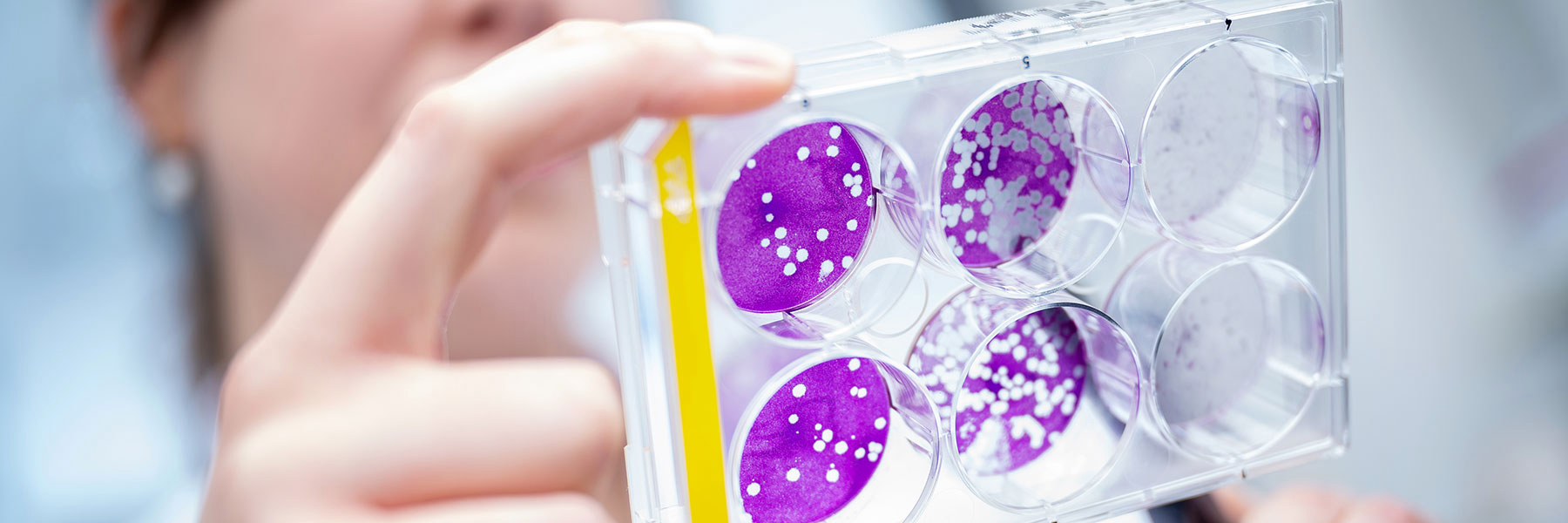
The Jantsch Lab’s key interest is to understand which tissue conditions promote a successful antimicrobial immune response. In this context, the lab focuses on the reciprocal influence of the local (tissue) metabolism / electrolyte balance on host-pathogen interaction. The focus of the work is on the role of innate immune cells (especially macrophages) in models of cutaneous leishmaniasis and Salmonella infection. In addition to various methods in molecular biology, immunology, bacteriology and parasitology, the Jantsch Lab employs technologies such as inductively coupled plasma optical emission spectroscopy (ICP-OES), luminescence imaging of oxygen, laser speckle contrast analysis for tissue perfusion and mass-spectrometric techniques. This will provide new insights by including the complexity of tissue microenvironment into host-pathogen interaction.
Funding
German Research Foundation / Deutsche Forschungsgemeinschaft
Center for Molecular Medicine Cologne (CMMC)
Medical Faculty, University of Cologne
Müller D, Geisberger S., Kleinewietfeld M., Jantsch J. (2023). Salt sensitivity includes effects on immune cell signalling and metabolism. Nat Rev Immunol, 23(6):341-342 ,
Neubert P, Homann A, Wendelborn D, Bär AL, Krampert L, Trum M, Schröder A, Ebner S, Weichselbaum A, Schatz V, Linz P, Veelken R, Schulte-Schrepping J, Aschenbrenner AC, Quast T, Kurts C, Geisberger S, Kunzelmann K, Hammer K, Binger KJ, Titze J, Müller DN, Kolanus W, Schultze JL, Wagner S and Jantsch J. (2020). NCX1 represents an ionic Na+ sensing mechanism in macrophages. PLOS Biology, 18:6. doi: 10.1371/journal.pbio.3000722.1
Neubert P, Weichselbaum A, Reitinger C, Schatz V, Schröder A, Ferdinand J, Simon M, Bär AL, Brochhausen C, Gerlach RG, Tomiuk S, Hammer K, Wagner S, van Zandbergen G, Binger KJ, Müller DN, Kitada K, Clatworthy MR, Kurts C, Titze J, Abdullah Z and Jantsch, J. (2019). HIF1A and NFAT5 coordinate Na+-boosted antibacterial defense via enhanced autophagy and autolysosomal targeting. Autophagy, 2019: 1899-1916
Schröder A, Neubert P, Titze J, Bozec A, Neuhofer W, Proff P, Kirschneck C and Jantsch J. (2019). Osteoprotective action of low-salt diet requires myeloid cell-derived NFAT5. JCI Insight, 4(23):e127868. doi: 10.1172/jci.insight.127868
Hayek I, Fischer F, Schulze-Lührmann J, Dettmer K, Sobotta K, Schatz V, Kohl L, Boden K, Lang R, Oefner PJ, Wirtz S, Jantsch J* and Lührmann A* (2019). Limitation of TCA-cycle intermediates represents an oxygen-independent nutritional antibacterial effector mechanism of macrophages. Cell Reports 26: 3502-3510, *shared senior authorship
Schatz V, Strüssmann Y, Mahnke A, Schley G, Waldner M, Ritter U, Wild J, Willam C, Dehne N, Brüne B, McNiff J M, Colegio O R, Bogdan C and Jantsch J. (2016). Myeloid cell-derived HIF-1alpha promotes control of Leishmania major. J Immunol 197: 4034-41.
Siegert I, Schödel J, Nairz M, Schatz V, Dettmer K, Dick C, Kalucka J, Franke K, Ehrenschwender M, Schley G, Beneke A, Sutter J, Moll M, Hellerbrand C, Wielockx B, Katschinski D M, Lang R, Galy B, Hentze M W, Koivunen P, Oefner P J, Bogdan C, Weiss G, Willam C and Jantsch J. (2015). Ferritin-mediated iron sequestration stabilizes hypoxia-inducible factor-1alpha upon LPS activation in the presence of ample oxygen. Cell Reports 13: 2048-55.
Jennewein J, Matuszak J, Walter S, Felmy B, Gendera K, Schatz V, Nowottny M, Liebsch G, Hensel M, Hardt W D, Gerlach R G and Jantsch J. (2015). Low-oxygen tensions found in Salmonella-infected gut tissue boost Salmonella replication in macrophages by impairing antimicrobial activity and augmenting Salmonella virulence. Cell Microbiol 17: 1833-47
Jantsch J, Schatz V, Friedrich D, Schroder A, Kopp C, Siegert I, Maronna A, Wendelborn D, Linz P, Binger K J, Gebhardt M, Heinig M, Neubert P, Fischer F, Teufel S, David J P, Neufert C, Cavallaro A, Rakova N, Kuper C, Beck F X, Neuhofer W, Muller D N, Schuler G, Uder M, Bogdan C, Luft F C and Titze J. (2015). Cutaneous Na+ storage strengthens the antimicrobial barrier function of the skin and boosts macrophage-driven host defense. Cell Metab, 21(3):493-501.
Mahnke A, Meier R J, Schatz V, Hofmann J, Castiglione K, Schleicher U, Wolfbeis O S, Bogdan C and Jantsch J. (2014). Hypoxia in Leishmania major skin lesions impairs the NO-dependent leishmanicidal activity of macrophages. J Invest Dermatol 134: 2339-46.




Team
Dr. rer. nat. Valentin Schatz
Dr. Tamara Rügamer
Matthew Mangan, PhD
Dr. rer. nat. Fadi Fadil
Jana Vonhoegen, M. Sc.
Dr. rer. medic. Julia Krebs
Anna Weigert, M. Sc.
Bohdan Holoborodko, M. Sc.
Sachiko Kolar
Sandra Grunewald
TRIO Reseach Building
Robert-Koch-Str. 21
50931 Cologne